Sunday, November 9, 2008

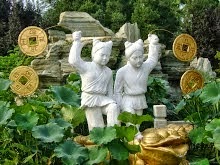
Yellow Flower Wall

From Let's Go China:

Built by General Cai Kai, Huanghuacheng took so long to construct that the unfortunate general was deemed inefficient and beheaded. As testament to his tenacity, his headless body stood vigilant without toppling for three days and three nights before the locals had him interred. When the Mongols attacked, Cai Kai's efforts paid off--Huanghuacheng was the only fortress that successfully warded off the enemy. Abashed, the government reburied Cai Kai with honor near the wall.

This past Thursday, a friend backpacking through Asia and I made our way by bus out of the city and out into Hebei province in an attempt to find a remote stretch of the Great Wall to hike. After battling with minibus drivers for a half hour about prices for the 90-km trip there and back, we finally decided on taking a long distance bus from Dongzhimen out towards Hairou, where we would have to either transfer or find a cab to take us on to Huanghuacheng--the "Yellow Lotus Wall."

We stayed on the bus until the very end of the line, which was in fact at a well-known access point to the wall known as Mutianyu. I tried to make myself clear when we stepped on the bus two hours before that we did not want to go to Mutianyu, but instead wanted to go to Huanghuacheng. As many Chinese do when they are trying to be helpful, they hijack your plans or intentions and instead set you on your way going somewhere or doing something that seems to fit into their conception of what you're looking for but misses the point in some fundamental way. My friend and I got off the bus at Mutianyu and, after using the facilities, came back outside and took out a map. The bus driver walked over and pointed uphill, smiling and repeating: "Great Wall! Great Wall! Go!" When I asked where Huanghuacheng was, he looked confused--"The Great Wall is right here," he seemed to be implying. "Why would you want to go somewhere else when it's right here?" Conversing in pidgin Chinese with this extremely friendly, helpful, chain-smoking bus driver was made much more difficult by the swarm of souvenir and food hawkers screaming around me: "Cup of water! Cup of water!" "Wall shirt! Wall shirt! Wall shirt!" "Cup of water!" "Wall shirt!"

I walked down to the parking lot with the driver and he again asked me if I really wanted to go to Huanghuacheng, and I replied in the affirmative. We got back on the bus, and a very friendly girl who spoke English clarified that the driver was going to take us somewhere to get a taxi. We backtracked about a half-hour from Mutianyu until we arrived back in Hairou, where we jumped off the bus and into a cab out to Huanghuacheng.

White paint surrounded the base of the trees lining either side of the winding road leading up through the valley. The paint had a concrete purpose--it was intended to keep termites out of the trees--but as we whizzed by them at frightening speeds one got the impression of that a white picket fence seemed to be lining the road up into the mountains. We passed by miles of barren cornfields, swerving around mules pulling cartloads of dried stalks back towards farms to be either composted or stored for feed. The autumn colors were out in Hebei, and all around us mountains shot up from the valley floor at drastic angles that made their terraced sides appear miraculous.

We were dropped off next to a reservoir near a small parking lot, with perhaps 2 or 3 people milling around selling oranges and bottles of water. A group of three Chinese were getting ready to hit the trail; two had backpacks on, and the third--a young man dressed in a newly-pressed suit--was walking around gingerly, trying not to get too much grit mixed into the black polish on his loafers. I was initially confused, until I remembered what I had heard about the significance of visiting the Great Wall for Chinese. Visiting the Great Wall is akin to a pilgrimage to Mecca for many Chinese--it is something that must be done before you die, and for many you cannot truly be a complete Chinese until you have visited the Wall. We crossed the reservoir and made our way up the hillside together, where you needed to climb up a ladder to access the first turret.

If it wasn't clear why such prestige is conferred on a visit to the Great Wall when we saw it in the distance on the drive up the valley, it all came into focus suddenly upon looking out the windows of the very first turret we climbed into. In the distance to the north, in what was formerly hostile, Mongol territory, rows of jagged stone teeth penetrating the sky above the treeline below formed a drastic contrast with a cobalt-colored background. The oranges, yellows, and reds of the trees still left with leaves all around us looked like specks of color dripped onto a tannish-brown and rocky canvas. To the south, the valley we had passed through on the ride up was abuzz with afternoon activity--mules pulling carts with rows of traffic backed up behind them, crowds of people standing at bus stops, waiting to head back to Hairou for the evening. Many chimneys were starting to billow smoke as wood-fired ovens began to cook dinners in the distance below us. Soon after he had several pictures taken of himself standing atop the wall, the young man in the shiny shoes climbed back down the ladder and strode down the path to the valley below. His pilgrimage was complete.

For about a kilometer we walked along a restored portion of the wall. Despite the even footing and lack of slippage, making our way both up and down 45-degree slopes had us absolutely exhausted after about 20 minutes of continual walking. As we came over the mountaintop, we saw off in the distance the Stone Dragon winding its way up the spine of a mountain twice the size of the one we'd just summited, disappearing into the sky at the topmost point. It was getting late now, and we jumped down off of the wall and onto some footpaths to cut some time off of our trek over to the unrestored part of Huanghuacheng.

Bricks that may have been several hundred or even a thousand years old grew loose as we clambered up the side of the crumbling wall further out. Whereas the stretch closer to the parking lot was smooth and firm with walls forming railings on either side of the walltop, we were now walking on top of a portion that was covered in displaced bricks and rubble. As we made out way further up the mountainside, the drop off of either side went from perhaps 10 or 15 feet up to 50 or 100 feet. At one point during the descent, my left foot did in fact slide a bit off over the side, sending some rocks down into the valley below. A close call.


(Sorry for the sniffling in the video clip above--I didn't realize the camera mic was that sensitive!)

Through turret after turret we continued to ascend as the afternoon darkened. At the highest turret we reached, as my friend was playing with the aperture or the focus on his new camera, I looked out onto the mountains to the north of us and the valley to the south and tried to fully gather the nature of where we were and what we were doing. I had seen pictures of this place since grade school. It was one of the first images that came to my mind and the one that comes to most people's mind if they know anything about China. It was a Wonder of the Ancient (as well as modern) World, and it was literally thousands of years old. I saw people conclude pilgrimages to this place earlier that day. The history combined with the altitude left me dizzy.


We hurried back down the rubble as daylight faded, stopping to eat some oranges, drink some tea, and once to sample some persimmons left by a farmer or another hiker or someone otherwise considerate of those visiting this place. By the time we arrived back at the refurbished portion of the wall where we had a bit more room for error in terms of where our footsteps landed, the sun had set. We climbed back down the ladder and guided ourselves down the hillside using the incredibly-handy flashlight located on the top of my Nokia cellphone (the cheapest yet by far the best cellphone I've ever owned), and when we got to the bottom I asked an old man who apparently rented fishing boats on the shores of the reservoir where we might be able to find some good food and a place to stay for the night. The few sentences of conversation came fairly easy--I guess the Mandarin lessons are paying off. He got on his cellphone and called "Jenny," so he said, who's husband, Mr. Liu, met us with a flashlight at the trailhead.

We walked back along the road to the motel run by Mr. Liu and his family. Smoke wafted from his mouth, at times because he had just taken a drag from a cigarette, and at others simply because the air had now grown so cold up in the hills that we could all see out breath in front of us. He walked us into one room--simple, cheap wood floors, a television in the corner, exposed pipes, with a naked woman printed on a tile on the bathroom wall. His wife came in after a moment and scolded him, it seemed like, for not offering us a better type of room.

We were taken down the row and into another room with an elevated platform bed emanating an incredible amount of heat. I had heard of these heated beds before, and the prospect of settling into one at some point in the next hour or so had me smiling with anticipation. We dropped our bags and headed to the dining room, where Mr. Liu showed me that there was essentially no food to be had, at which point he handed me a menu and told me to order whatever we wanted. He brought over to us as appetizers a plate filled with small, wet, green apples. Apparently the purpose of the water still sitting stagnantly in the plate was to indicate that the apples had in fact previously been washed.

Mr. Liu sat down with us down at table, poured my friend and I a cup of tea, and became insulted after we initially refused a pair of cigarettes he offered us. The green tea (lu cha) tasted particularly good when mixed with a chew on the apple. The several minutes it took Mr. Liu to throw together some vegetable friend rice and sweet and sour chicken allowed us some time to chat for a bit about how indescribably impressive the Wall was. What was even more impressive was how we had managed to find ourselves here, the only inhabitants of a mountainside motel in a small town in Hebei province. It was a far cry from the dormitory that we had woken up in earlier that morning in Beijing, or the houses in the suburbs that we came from before that. It was nice getting out of the city--the air tasted better, and incredibly the people seemed even nicer than they were in Beijing.

The platform bed was so hot that I thought about tossing off the comforter. Aside from a thin mat placed over the platform itself, we slept on what felt like a table. That next morning, my back had never felt better.

Show and Tell

The first project that was undertaken in the speaking classes that I’ve been teaching was, I thought, quite a simple one, and many students came up with extremely creative takes on the idea of a “Show and Tell.” I pitched the exercise as an extension of the introductory process that had been going on throughout the first several weeks of the semester, and told them that they should try to pick an object that would help them to explain to the class something about themselves that most people, including their friends, may not have known otherwise. Some truly used their objects to bring into discussion something personal and interesting, and some students presented on material that had them in tears by the conclusion of their brief, 5-minute talk. Others brought in no object at all but conducted a discussion as if there was something there beside them. Other students used the time to wax wise or poetic or recent current events. Some of the presentations that got away from my initial intentions for the project proved to be the most thought-provoking or response-generating—particularly those that delved into hot political or social issues. All in all, over the past several weeks I’ve heard somewhere around 100 Show and Tells that have run the whole gamut from good to bad, appropriate to inappropriate, interesting to unbelievably boring. The reason that this post in only being put up now was because the project set me up with an absolute truckload of grading to do, and I’m only now digging out from under the pile.

Here are brief synopses of a few of my favorite ones.

--

On the day when I first explained the assignment, I wasn’t expecting that anyone would be chomping at the bit to get up in front of the class to offer everyone an example of a Show and Tell, but a new student in one of my advanced classes raised his hand when I asked for any volunteers. He got up from his desk in the front of the class and loped up to the lectern, where he took out of his pocket a largish red pin with the an infamous profile pressed on it in gold. “As you all must know,” he began, “this pin contains the likeness of Chairman Mao.” I tightened up and clenched my teeth slightly—I had thus far avoided any sensitive political discussion in class, and I was not prepared for this. “Many Chinese have a very complicated relationship with the legacy of Chairman Mao, I know. He made many bad decisions,” he continued, and I forced myself to straighten up in my chair and hide the tension that I felt building in the classroom.

“I believe, however” the freshman continued, “that there are many good things that a young Chinese man like myself can learn from the life of Chairman Mao. He was an idealist, as many young people are, but he also had the resolve to try to turn those ideas into reality. Some of them were successful and many of them were not, but regardless Mao is the one who is largely responsible for the success China enjoys today. For his willingness to not be just a man of poetry and ideas but also a man of action, I respect Chairman Mao and his legacy.”

I didn’t really know what to say. I would soon learn that this student had studied abroad for a semester at Cornell on an elite scholarship awarded to incoming Tsinghua freshman, but I didn’t know that then. I saw that some of his ideas were misinformed and quite dangerous, but his level of circumspection and eloquence was striking. At the conclusion of his speech, the students offered the biggest round of applause I’ve heard in class this semester.

--

One of the first presentations given in front of one of my non-English major, upper-classmen classes involved a engineer standing up, walking to the front of the classroom, composing himself, then tearing from a scabbard on his hip a “scimitar” (as he described it) that he proceeded to wave around as he danced as if engaged in a swordfight. He then took a massive imaginary gulp from the embroidered wine sack hanging over his shoulder, and recommenced the swordfight, this time staggering around a bit. After maybe 30 seconds to a minute, he stopped, and began his oral presentation, which dealt with his trip over the National Day holiday break to Inner Mongolia, where he bought the scimitar and wine sack and where he met the Mongolians that he was here trying to impersonate for the class. As he explained, however, the smallish scimitars were used primarily for slaughtering animals and for other utilitarian purposes. According to the student, all Mongolian men carried one, all the time. I suppose that the fights break out when the scimitars and combined with the wine sacks, as per his demonstration.

--

A freshman English major who had previously not said a word in class came to the front of the class and spent the first minute or two of a five-minute presentation profusely thanking everyone in advance for their attention and thanking Mr. Meenan for organizing this especially interesting project for the class. (Earlier in the semester, when I had asked each freshman to present me with a “business card” that contained a photo as well as some personal information, where his name should have been he instead wrote: “If you don’t know me then you’re an Ignorant Newbie.” I was initially infuriated, but then realized a minute later that something had to be amiss. When I confronted him about it after class his face turned purple, and he said: “I was wondering when you would ask me… Someone played a joke on me, it was a mistake to listen to them. I’m so embarrassed.” All was of course immediately forgotten, and I instantly felt like a total jerk for jumping to the conclusions that I jumped to initially.) His presentation was about becoming the martial arts champion for his age group in his home province, and be had brought in to show to the class a kind of feather-covered mace that he was an expert in using. The mace looked like is had barbs sticking out of it, and the chain alone had to have weighed several pounds. He couldn’t demonstrate anything in the confined space of the classroom, but the rest of the class assured me that he was incredible. (He had given a demonstration at military training in late August that clearly made an impression.) As he played a little bit with the spiked ball and chain while speaking, I made a promise to myself that I would not respond with any attitude if in the future this student decides to intentionally call me any names.

--

Another student in the same class began his speech by displaying an MP3 player for al of us. Several other students had also presented previously on PDAs, or MP3 players, or tape players, or CDs, or tapes, or DVDs. I kept trying as hard as I could to make it clear that this was not what I wanted—that I wanted something personal, unique, something that the class wouldn’t expect. He began by speaking about the different features that the player has, and about how much better it made his last birthday party because he was able to bring so much music along. He then took a different tack and began talking about the connection that the player has helped to forge between him and his father, who worked so much that he rarely had time to spend even on meals with his family. The MP3 player was a surprise present, and on the day that the student had received it his mother told him that his father had driven 700 kilometers and spent several weeks’ pay on the gadget. It was one of the first times he remembered, the student said, when he felt a kind of intimacy with and warmth from his Dad. The son realized that the father must in fact have been loving him all along.

--

For the “Show” part of his presentation, one student showed a series of clips from different American sitcoms, including Gossip Girl, Friends, and Buffy the Vampire Slayer. It was through American television, he explained, that he first began to gain experience with spoken English. He continued on to explain that his first experience with American TV shows dated back to his first episode of “The Growth of Pain.” For a moment, I was envisioning some kind of spinoff from Buffy the Vampire Slayer that had gone straight to DVD that was only available in China, but when he started talking about Mike, Ben, and Carol Seaver, I realized that he was in fact talking about “Growing Pains”—a favorite of mine as well.

--

Another student from one of my upper-level speaking classes brought in a photograph of her and her brother to pass around to the class. He was one year older than her, she explained, but in many ways that gap seemed much larger. He was “her leader, her protector, her defender.” His leadership and love inspired her to work as best she could to make something significant out of her life, and she cited him as being the main reason why she was now attending such a prestigious university. When her brother went off to university—a very good but less prestigious school—things took a turn for the worse, however. With tears in her eyes, my student explained that, by the second semester of his freshman year, her brother had to withdraw from university because of video game addiction. (Freshman here, during the fall semester, are actually not allowed to have personal computers, due mostly to addiction fears. Several clinics for treating video game addiction have opened up around China. Some estimates believe that as many as several tens of millions of Chinese might be addicted to video games.) Her brother is still out of university, but she still finds in him the inspiration that she always has.

--

A female student came up to the front of the room with a fountain pen in her hand. I braced myself for what could be a snore, but I had learned from previous presentations that many students did have a knack for generating interesting discussion out of the most mundane objects. As students passed around the pen, several exclamations of disbelief and admiration were heard. The student in front of the class went on to explain how she had received the pen during her internship at one of the most prestigious international law firms on the planet. The summer was brutal—tons of work, very little of it enjoyable. She began to see how, at this high-octane firm, even second- and third-year Chinese lawyers were handling grunt work that was no longer in the purview of white lawyers with the same amount of experience. One day, late in the summer, towards the end of the internship, she walked into a partner’s office and asked about the disparity. When the explanation she was given was not satisfactory, she told the partner that she was not interested in a job with the firm after the conclusion of her internship. She of course was not offered a job, but now is excited to pursue a career in law that—instead of assisting in mergers and acquisitions, real estate, and trade—“actually helps people.”

Wednesday, October 29, 2008

Learning the Ropes

I have eaten with nothing but chopsticks since I arrived in Asia. Not one fork. Knives I use to spread peanut butter onto sandwiches for lunch occasionally, and spoons are sometimes employed to help shovel rice around my plate, but none of those vulgar, food-piercing instruments so popular in the west have graced any of my meals since I have been out here. Every restaurant provides you with chopsticks only, from the nicest to the dingiest—the only difference is the quality of wood or plastic.

Me and the sticks, we have a love/hate relationship. Although I’ve been lucky enough to have had what I considered plenty of experience with chopsticks before I can to China (from eating at the occasional traditional Chinese or Japanese restaurant), I was not prepared for the volume of progress I still had to make. Certain foods in particular require a skillful, practiced approach to move them from plate or bowl to mouth efficiently—and, more practically, without redecorating every article of clothing you happen to be wearing that day.

I am what I’d like to think of as a “vigorous eater.” I enjoy food, and frequently eat it entirely too fast. What I appreciate about chopsticks is their ability to slow my meals down, whether I like it or not. Many Chinese have mastered the art of using them to essentially bulldoze their breakfasts and lunches down the hatch as quickly as possible, particularly when they’re eating alone. Dinner time is more often a more casual, protracted meal that involves conversation and a more deliberate, less vacuum-like approach. My problem is that not only do chopsticks slow me down in the dining hall, but they dramatically increase the amount of time it takes to do laundry every week.

At first, I squeezed hard, both on the free-floating upper stick (which I used to hold with three fingers, and now hold with only two) and on the food that was pinned between. One in every ten bites would result in whatever I was holding spiraling out of my grip and onto my pants or shirt, back into my bowl, onto the floor, or, once, onto the plate of the person across from me. “Thank you!” they said politely, while laughing. Like with many things in China, though, it’s when you begin to let go a bit that things get much easier. I relaxed my grip. I used only two fingers on the upper stick, which allowed me to more easily move the pincers into just the right angle or crevice to latch firmly on to the morsels. By holding food more lightly, it simply dropped back onto my plate instead of spiraling away like a comet when I lost my grip. After having damned Confucius for so long for instructing Chinese chefs to make their food in such a bite-size way that it did not need to be cut to be consumed, I finally felt as if I was on the inside of an elaborate joke on the uninitiated.

One week during office hours, I was talking about my eating problem with one of my students. I had told him that I was slowly beginning to learn the ropes, I thought, and he replied, “What ropes?” After laughingly explaining another idiom that continued to demonstrate to me how wacky the English language is, he laughed, mentioning how I probably haven’t had many noodle dishes yet. “Just wait until you get to the noodles,” he said. I had had one particular noodle dish before—niu rou chao mian, which is the basis for the Americanized “beef chow mein”—and said to him that I felt as if I had already mastered the noodles. “There are others, though” he said: “the wet ones.” Somewhere in the distance a bamboo flute must have been fluttering menacingly.

I arrived in the food court a couple of nights later intent on finding some of the noodles that were supposed to be able to kick my food-handling ass. This place has everything—hot pot, noodles, the best dumplings you’ll ever have, beer, orange drink, the whole nine—but I was searching then through the dim, hospital-like florescent light for a sign with the character for mian—noodles. Restaurants were arranged in stalls, and as you walked by fuwuyuan would hawk their wares aggressively, practically screaming at you to come try their fish or vegetables or whatever. Chinese folks sat all around me, shoveling. I looked on enviously, then made my way over to the stall with the most people crowded around it. It was, of course, the noodle shop.

I pointed to a picture of a bowl of noodles soaking in red broth with what looked like chunks of beef and potatoes floating in it. Despite every effort on the part of the photographer to make it look like prison food, the dish struck me as visually delicious, which usually translates into actually delicious in Chinese restaurants—usually. The poetic name for the noodle dish had the word for mountain (shan) printed in its title: “mountain noodles,” which sounded good enough for me. In t-minus three minutes I was presented with a steaming, not-quite-clean-looking bowl of goodness, along with a kind of hot, sweet ricewater soup/drink that actually contains a bit of alcohol in it. I would use this incredible concoction to cut the taste and heavinessof the inordinate amount of grease and oil coating the noodles after I was done.

Even though I was trying to move carefully over to an unoccupied green plastic seat, I was unable to keep all of the noodle broth in the bowl. I sat down and prepped—I unwrapped the sticks, split them, rapped them hard against the table (probably generating more splinters than I was discarding), and laid my napkin out in front of me, at the ready. Pridefully, I did not tuck it into my shirt, or lay it out on my lap. I was thinking a way that I thought a Chinese might try to think in such a situation: “Food belongs in your mouth, so put it in your mouth, not anywhere else. Why would you want to wipe your lap or shirt? Save the napkin for blowing your nose if it gets runny later on.”

The hand-stretched noodles that were created minutes before being thrown into the boiler were absolutely, stupendously, outstandingly tasty. Many of the strands were a couple of feet long and would clearly require a bit of delicate maneuvering. I lowered my head over the bowl, and began trying to shovel like a pro. After maybe a bite or two, while I was sucking noodles into my mouth greedily, a noodle snapped out of the bowl and whipped red grease all over my shirt collar. Noodles: 1, Me: 0. I kept at it. I stopped trying to suck down the long, stringy strands and instead began picking up bunches of noodles at a time and bit them off in mouthfuls. I raised a bunch to my mouth, bit down, and released the strands, which dropped back into the broth, sloshing a small wave of oil down onto my pant leg. Staggering forward, I persisted through the meal. Teasingly-small pieces of beef and potatoes went spinning out of grip and onto my lap. Cilantro leaves stuck to the side of my face when I tried to chomp home mouthfuls. I mishandled another group of longish noodles, sending them flopping back down into the bowl and launching another barrage of staining droplets outwards onto my sleeve. I got up from the meal looking like the floor of Pollack’s barn in Springs, New York. I covered myself with my fleece quickly as I left, moving quickly out the door in shame. Somewhere, Confucius was laughing.

I’ve found that dry cleaners located on the university’s campus seem to remember the “dry” but forget the “clean,” so a few days later I found myself sitting in my living room huddled over a washbasin with a bottle of Shout, recapping my defeat. I promised myself I would wear a cheap t-shirt and not one of my work shirts for Round Two.

There have been many subsequent rounds with the wet noodles. They are just too good to resist sometimes. Sometimes I rule the day, sometimes they win the field. Every time, the food is outstanding. Although I feel from time to time like the Gerber baby learning to eat again, I inevitably still eat with the exuberance of a small child here in China, albeit with a bit more caution.

Thursday, October 16, 2008

Teacher at Work

I just got done preparing a new message that I'll be posting for all of my classes on each of their class websites using the university's e-classroom:

Please read all of the following message carefully:


Over the past two weeks or so, many students have both approached me in class and written to me by email asking for absences, latenesses, and early departures from class to be excused. I have been extremely lenient in granting excuses over the past couple of weeks, but the increasing volume of these requests has begun to cause me some concern.


I am not sure what policy other teachers and professors at T------- advance when it comes to lateness, absence, and early departure from class, but I have already mentioned my policy in class several times. My policy is also described in writing in our class syllabus, which is available for review and download under the “Course Documents” section of this website.


There are only two reasons why you should be either late, absent, or leaving class early: 1) you are experiencing a family emergency, or 2) you (and not anyone else) are experiencing a medical emergency. In the future, I will only excuse an absence, lateness, or early departure if it is because of either a family or a medical emergency.


I understand that many of you are involved in volunteer events and organizations that place a great demand on your time. I come from a family and from an educational background that insisted on giving back to the larger community and society around me to whom I owe so much, so I can appreciate and I applaud your involvement with volunteer activities. Your classes at T-------, however—including English classes taught by foreign teachers—take priority over everything else, except for family or personal medical emergencies. A volunteer opportunity, a social gathering, a lecture, another class running overtime, etc. are not acceptable excuses for missing a class or any part of a class. If you are enrolled in a class either before or after my class that is taught by a teacher or professor that is asking or demanding that you miss some or all of my class, this teacher or professor is wrong—you have enrolled in my class, and you should be in my class from the first minute to the last unless you have a legitimate excuse. Because my courses do not typically involve much homework, it is even more important that you make an effort to be present for every possible minute of every class, so that I can have enough information to give you a proper grade at the conclusion of the semester. When you are not in class, you are depriving yourselves and your classmates of knowledge and input that could help or change for the better yourselves and/or your classmates, and this deprivation is unacceptable—unless an emergency arises.

Therefore, in the future, before you ask me to excuse an absence, a lateness, or an early departure, please ask yourselves these three questions: 1) “Is it a personal medical emergency that is causing me to ask Mr. Meenan to be excused?” 2) “Is it a family emergency that is causing me to ask Mr. Meenan to be excused? 3) VERY IMPORTANT: “Would I feel comfortable asking any one of my Chinese-speaking laoshi to be excused in this instance?” If the answer is “no” to at least two out of three of these questions, then do not ask me to be excused. If the answer is “yes” to 1) both questions 1 and 3, or 2) questions 2 and 3, then go ahead and ask me to be excused and we will talk about your situation.


Regardless, if we agree that your absence, lateness, or early departure is excusable, I will also need a note from a medical or administrative authority at the beginning of the following class for you to be finally excused. I will have the note read and verified by a dean in the Department of Foreign Languages, so even if you can only obtain a note that is written in Chinese, that is acceptable. Again, any notes that you wish to give me to complete the process of excusing an absence must be delivered at the beginning of your next class with me.


As I said during out first week of class, there is only one behavioral rule that I ask you to keep in mind when dealing with me and your classmates: “Treat others with a degree of respect that you desire for yourselves.” I have a tremendous amount of respect for you as my students and as students at a university as prestigious as T-------; all I am asking of you is that you grant me a similar degree of respect.


Thank you to all of the people who have asked me to be excused for a valid reason, and for providing me with a note at the beginning of our next class together.


Thank you all for reading this long note. I’m looking forward to seeing you all again in class next week.


Mr. M-----

After reading it over again just now, it seems like I might be better fit for writing legal briefs instead of ppts on oratory technique. Some very ridiculous reasons for missing class have been thrown my way in recent weeks--"I'm volunteering at a pre-season NBA basketball game downtown" (pretty cool, I have to admit) and "I was at a friend's birthday party" first come to mind. As the reasons and requests have piled up, I've slowly begun to lose my taste for being as lenient as I usually am with such things. As student after student either sent me one self-deprecating and conciliatory email after another, or came striding up to me in class with a brimming smile on their face (the default Chinese expression of nervousness, used to try to defuse antagonism or discomfort when an uncomfortable subject is broached in conversation), I began to get the vaguest of impressions that they were taking advantage of me. It's not typically my style to work so passively to try to get a message across, but that's the way that things seem to work over here sometimes--or, in fact, all the time, in my experience thus far. We'll see how they all respond.

Monday, October 13, 2008

Sunset in North Beijing

About one in every eight or nine nights, if you walk out of my apartment door at about 6:15pm (and getting earlier by the day), make a left, walk 100 feet, make a right, pass under lines of drying clothes, pop the door and step out onto the patio at the western end of the 11th floor of the my building, you're treated to a 100%-natural fireworks show:

Another Summer Palace


One of the few tourist trips I did get around to making during the National Day holiday was to the second, more oft-visited Summer Palace several kilometers west of the Old Summer Palace that I visited before school started. Although construction here began in 1750, it took the Empress Cixi's embezzlement of government funds intended for the Chinese navy to build up the palace to its present grandeur. The navy was defeated by the Japanese, but visitors to the park can still benefit from the funds stolen by Cixi. Yiheyuan is in substantially better condition than its older counterpart next to the university, Yuanmingyuan, and the couple of hours I spent here did not allow me to see nearly as much as I could have if I had a half day or whole day to explore. At times over the summer, Chairman Mao himself was known to retreat from the hustle and bustle of downtown to the shores of the Kunming Lake in the city's northwest for a few weeks' reprieve.


The park, which surrounds the massive Kunming Lake (easily locatable by searching "Beijing, China" on Google Maps and by scrolling northwest of the city center), has as its centerpiece the terraced, hilltop Incense Burning Tower, which faces out directly south onto a man-made island containing a temple that looks due north back across the lake. The tall, white temple pointing out of the Xiangshan ("Fragrant Hills") in the distance to the west of the park can be seen alongside the setting, smog-muddled sun that made its way into many of the pictures I took that afternoon. Unfortunately, tourists were swarming all over the park that day, coming from all over the country to see the second-most visited site in Beijing after the Forbidden City. Essentially every non-critical worker in the country had off from Wednesday, Oct. 1 through the following Monday, and at points it seemed as if every one of them had converged on Kunming Lake that afternoon.


After being informed that the "student fee" was only applicable for Chinese students (and that, no, even though I was teaching Chinese students, that didn't matter) I shelled out 30 kuai and passed through the massive series of entranceways into the park. On the bike ride over, a massive wall composed of hedges and concrete had made it impossible for any non-paying passerby to get a glimpse of the windswept, sunbathed expanse of water that greeted me only after I had passed by no less than a dozen stands featuring exorbitant prices for fast food and souvenirs. Bright new paint glistened under the eaves of each temple that I passed by, paint that was just recently applied by hundreds of artisans employed in advance of the Olympics. Hundreds upon hundreds of domestic tourists, taking advantage of China's increasingly-profitable economic reform, now had the cash to spend on all-inclusive trips to Beijing to get some use out of recently-purchased, high-end digital cameras--everyone I saw, including me, seemed to have one glued to their hand.


I passed the food stands and out onto the promenade surrounding the lake, upon which were strewn dozens of paddle and rowboats. Families had taken out massive floaters that allowed six people at a time to pedal the boat along. On the island directly over the bridge in front of me, younger couples had climbed down large boulders to the water's edge, where the girls would test the water gingerly, laughing into hands placed demurely over their mouths. An older woman practiced taiji as the sun set, unaware of the children running around her against their parents' wishes. For about two hours I wandered over bridges and around temples, participating with the throngs in snapping up photos of the experience. It was a beautiful Friday afternoon and the wind coming off the lake was buffeting my fleece and turning my cheeks red, but it felt great. Autumn in Beijing.


The next trip will be to Xiangshan where from the summits at the end of October you can look out onto a sea of burning red maple leaves. There'll be many pictures to follow after that excursion. Additionally, I haven't yet been to any kind of haggle-intensive market, which should produce not only a bunch of pictures but a bit more lively story as well. Still haven't been to the Forbidden City or done a proper tour of Tiananmen either, so there'll be much more to come if you're interested in more photos. Until then...

--

Speaking of the Summer Palace, I just read a great bit of fiction by Yiyun Li that appears in the most recent edition of the New Yorker. Mentions a couple's walk along the very promenade I strolled along the other day. Check it out if you have the chance.

Sunday, October 5, 2008

The Office

Although it’s not quite something straight out of the Scranton, PA-based office that Steve Carrell heads up the NBC sitcom, my office in the Department of Foreign Languages is slowly developing into an extremely quirky locale that I get to experience on a sometimes pleasantly and sometimes unpleasantly consistent basis.

A few days after the school year began, I met a Chinese colleague on the way down the hallway who works in the office across the way from mine. Walter had just gotten back from spending a year teaching a class on modern Chinese art at a small liberal arts college in the American Midwest, and he was interested to hear what it was that was pumping into my head through the massive Bose headphones I had wrapped around my head. We starting talking about music and then a bit about the class he was teaching here at Tsinghua—“English for Art Criticism.” By the end of the conversation I had agreed to come in one day to tell the class what I thought about modern art generally. We’ll see if that lecture ever comes to fruition and, if it does, how much of a catastrophe it turns out to be. (I would probably just end up going over Paul Klee’s On Modern Art with them, which, for anyone who’s interested, is a very short but very very interesting discussion of Klee’s personal theory of modern art and what it is supposed to do—if anything at all.)

Its high ceilings and large windows (with a little green courtyard outside) make the place seem surprisingly appealing, despite the bars stripped across the glass to prevent robbers from breaking in and grabbing the computers. There is a pile of what looks like either mulch or dirt in a plastic bowl filled with water right in front of where you enter the office. The mystery mix—perhaps meant for gardening in the courtyard outside—actually gives the place a kind of earthy smell that counteracts the sterile effect of the cleanly-mopped white tiles covering the floor.

While writing at one of the computers early on a sunny Thursday afternoon two weeks ago, I heard a song come on loudly in an office down the hall from mine. It was some kind of Chinese pop tune, and the male singer’s voice was strained in what must have been a lover’s lament. The song ended and then immediately was replayed, this time with an extra male voice thrown into the mix. Someone down the hall then proceeded to replay this Chinese pop song at least a dozen times, singing along each time, until their voice must have just been absolutely obliterated. I took a rest from work for a minute to listen in—all I could make out were some lyrics saying something like “I love you”—but to be frank neither one of the singers’ voices were that good. The fact that myself and everyone on the hall had to listen in over a dozen times not to gentle crooning but to booming, out-of-tune Chinapop seemed a little bit much to ask, even if this guy down the hall was aspiring to karaoke superstardom or something.

I am pretty sure that the singer is a fellow who constantly comes in to my office early in the morning to wash up and brush his teeth. We have a sink, as well as a bunch of brooms and mops, right behind where our desks and filing cabinets are located (the office itself actually used to be a broom closet that they converted into an “office”). The past several times I’ve been around at about 7am or so, someone has rolled out of the department’s periodicals library next door and came in, toothbrush and washtowel in hand, ready for his morning toilet. I’m not quite sure what the deal is, but I think that there is a good chance that this guy sleeps in the periodicals library either on some nights or every night. We’ve now ran into each other several times and, unlike Walter, he’s made absolutely zero attempt to introduce himself. When we do “speak” to one another on those early mornings and even later on in the day, his answers are monosyllabic grunts more so than language. Apparently I am not the only one to experience some rude behavior from the periodicals librarian—even some of the Chinese folks have commented laughingly that he has a reputation for ornery comportment.

One day about a week ago, I was sitting in my office on another beautiful early afternoon towards the end of the week, and I heard another voice coming out of the office next door. This one was unaccompanied by any music, but it was richer and more refined than even the “professional” pop singer I had heard the week before. I was an older tune—the song didn’t follow a verse-chorus-verse progression, and some of the notes were haunting, like those that come out of an erhu (an instrument that consists of “two strings,” the literal translation of its Chinese name). The voice stopped and, maybe 15 minutes later, Walter walked out of the office across the hall and made his was out the department’s main door, done with work for the day.

I’ve begun to work in my office more and more as my first month in the city has moved along. I can come in at any time I want, thanks to the 24-hour security guards who are “standing watch” over the department’s always-open doors. They have a TV in the office where there is usually a couple of them stationed, and from what I’ve seen the overnight routine usually consists of one watching the tube while the other catches some ZZZs—easy money, if you don’t mind living like a vampire.

I no longer have to show my i.d. to any of the guards in the office, as it is that, for the first three weeks of the semester, I had an excuse to be constantly in their face asking whether or not several packages from the States had arrived. At one point, I was standing in their door two or three times a day when I was waiting for some crucial medical documents I needed for my residency visa. After I finally got the materials for my visa, I was expecting a delivery of a couple of boxes from Amazon, which had me in the same doorway slightly less often. At one point around a week ago, before I could even open my mouth as I approached the office, one of them gave me a preemptive meiyou (“don’t have [it]”) before I even noticed that they were looking in my direction. Eyes rolled as I craned my neck to look at the stack of boxes behind the two men on the other side of the window, and my scan revealed two boxes with the characteristic Amazon smile on their sides. They were two boxes in a stack of twenty other similarly-sized boxes, and, because I didn’t yet know how to say “below” or “above,” they went through almost every single one before they got to the first Amazon box. I figured that a good way to gesture to them about what I wanted was to smile maniacally (imitating the Amazon logo), point at my face, and then point at the boxes they were rifling though, saying zhege, zhege (“that one, that one”) over and over again. They were both very happy to see me leave after they finally found both boxes. At least when I walk by the guard office now, all I get are smiles—massive, maniacal smiles. Those were the last boxes I needed from them, and I think I might have stuff shipped to my apartment instead from now on.

Speaking of vampires: Although I do like working in my office at night, the walk from the guard’s office to my door can be a real gut check. (See photo: “Cozy if you’re ... Hannibal Lecter.) Once I get inside, sit down at my desk and start working, I’m always slightly stressed as I hear shoes patter down the tile hallway approaching my door. The last several times I’ve heard those footsteps, however, it’s been my officemate, Rob, an Englishman, who also likes to work there late. I liked Rob immediately from the minute he opened his mouth at orientation, commenting that he taught “English Literature and Culture—or a lack thereof” here at Tsinghua. Extremely funny individual. His lecture this semester is going to be on the Chinese obsession with football/soccer and, in particular, David Beckham. Looking forward to that one. He teaches English for law majors here, along with several courses in a program designed for wealthier Chinese high school post-graduates who want to brush up on their English to help with their chances of getting into British colleges. I saw him earlier this evening, actually. He stopped by for a minute with a third-year law student who was looking to expand her musical horizons, and Rob was able to provide her with some albums by the Beatles, Pink Floyd, and Radiohead. The three of us talked for a while about Thom Yorke and Jonny Greenwood, and Rob was pleased to see that someone in America knew about them. The student who came in with Rob was involved with a guitar-playing club on campus, and we talked about the prospect of me stopping by one day to perhaps learn a couple of chords with them.

After Rob and I parted ways outside of the department, I put on my jacket and pedaled home through the rain. I was dressed as if I’d just come from the gym—the only laundry I had available, the rest of it being strewn all over my room drying in the super-dry Beijing air in my apartment. I’ll probably venture down to Wal-Mart at some point soon to pick up a drying rack, but the colors strewn across the furniture in my living room actually helped to brighten up a living space that has been described by someone down the hall as “depressingly Spartan.” (Note bedsheet hanging from an open window.)